Beef Bone Broth.
A Pioneer Kitchen Staple for Body & Soul
There are few things more grounding than a pot of beef bone broth simmering away in the kitchen. It is humble, practical, deeply nourishing, and rooted in the kind of kitchen wisdom that sustained families long before convenience foods existed.
In a pioneer home, nothing went to waste — and bones were considered a treasure. Beef bone broth was made not just for soup, but for strength, recovery, warmth, and sustenance. It was food and medicine, nourishment for the body and comfort for the spirit. And in many ways, it still is.
Beef bone broth is hearty and mineral-rich, full of protein, collagen, electrolytes, and slow-released nutrients that truly fill your belly — but also your soul. It’s the kind of nourishment that makes you feel cared for.
Why Beef Bone Broth Belongs in Every Traditional Kitchen
Beef bone broth is more than just liquid for soup. It is a foundational ingredient — one that quietly supports the body day after day.
Benefits of Beef Bone Broth:
Rich in collagen and gelatin, supporting joints, skin, and digestion
Contains natural electrolytes like potassium, sodium, and magnesium
Provides protein in an easily digestible form
Supports gut health and overall nourishment
Deeply warming and satisfying, especially in colder seasons
For generations, broth was always on hand. It could be made ahead, stretched across many meals, frozen for later, or preserved for the pantry. Having broth ready meant dinner could come together quickly — and nourishingly.
The Secret: Good Bones
The heart of good broth is good bones.
I always start by sourcing grass-fed beef bones from a local butcher. Ask for marrow-rich bones — these are where the nutrients live. Many butchers are happy to sell bones frozen in bulk, which makes it easy to keep a supply tucked away in the freezer until you’re ready.
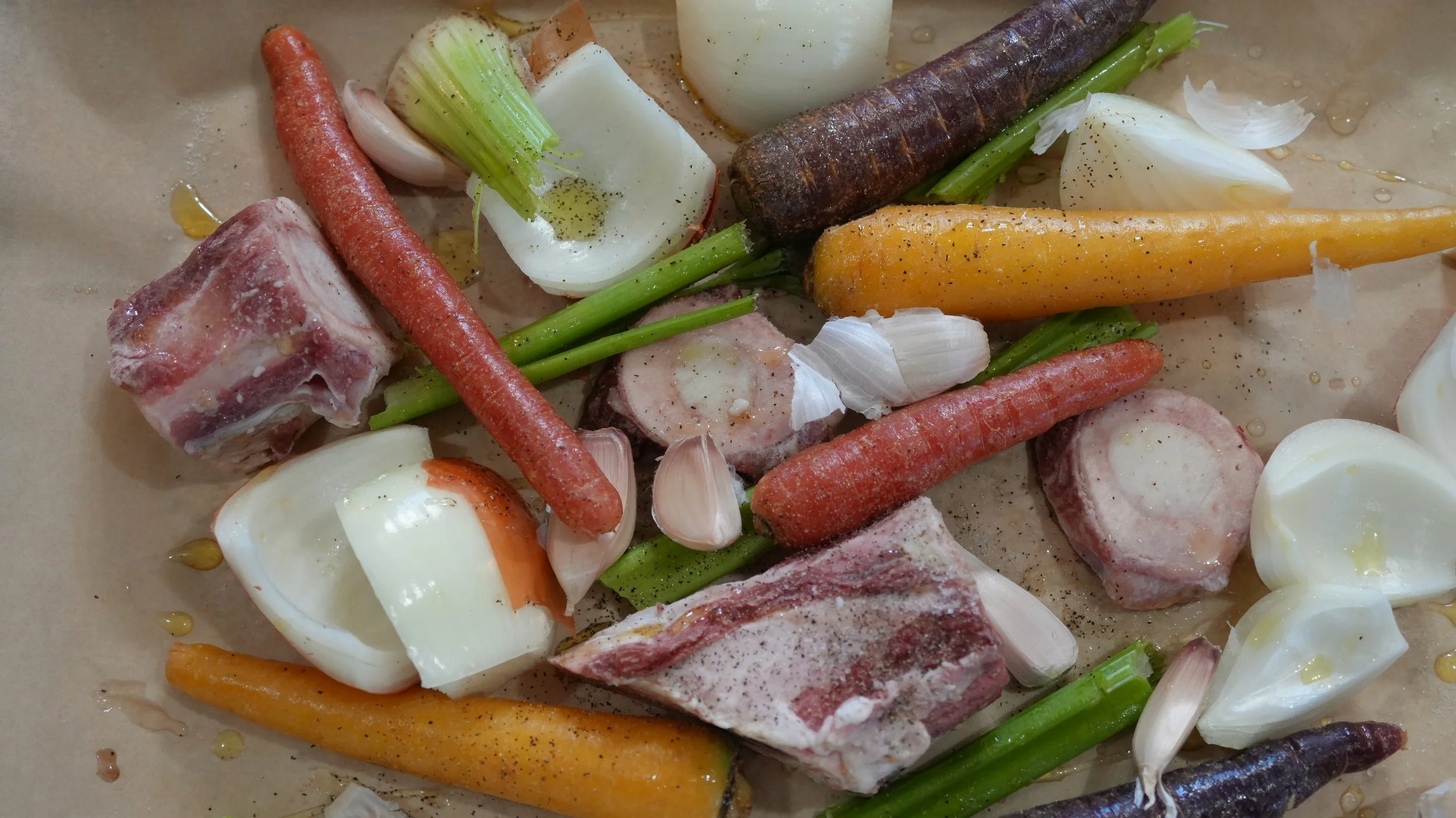
Earlier in the day — morning or early afternoon — I take the frozen bones out and spread them onto a parchment-lined baking sheet to thaw. This slow thawing keeps everything clean and manageable.
Roasting the Bones & Vegetables (Building Flavor)
When you’re about two hours away from dinner, it’s time to build flavor.
Onto the baking sheet go:
4–5 marrow-rich beef bones
4–5 whole carrots, washed
2–3 ribs of celery, washed
1 whole onion, roughly chopped (outer peel removed, inner skins left on)
5–6 cloves of garlic, unpeeled
There’s no need to be precise — pioneer kitchens were guided by instinct, not measuring cups.
Drizzle everything with about 2 tablespoons of olive oil, then sprinkle generously with salt and black pepper.
How to Roast (and Why It Matters)
Roasting deepens the flavor and color of your broth. This step caramelizes the vegetables, renders some of the fat, and brings out a rich, savory depth.
For a slower, gentler roast:
Bake at 350°F for 45–60 minutes
This is ideal if you’re concerned about smoking or burning fat.For a faster roast with deeper browning:
Bake at 400°F for about 30 minutes
Keep an eye on it — if the fat begins to smoke, lower the temperature.
You’re looking for beautifully browned bones and vegetables, not blackened ones.
Pressure Cooking the Broth
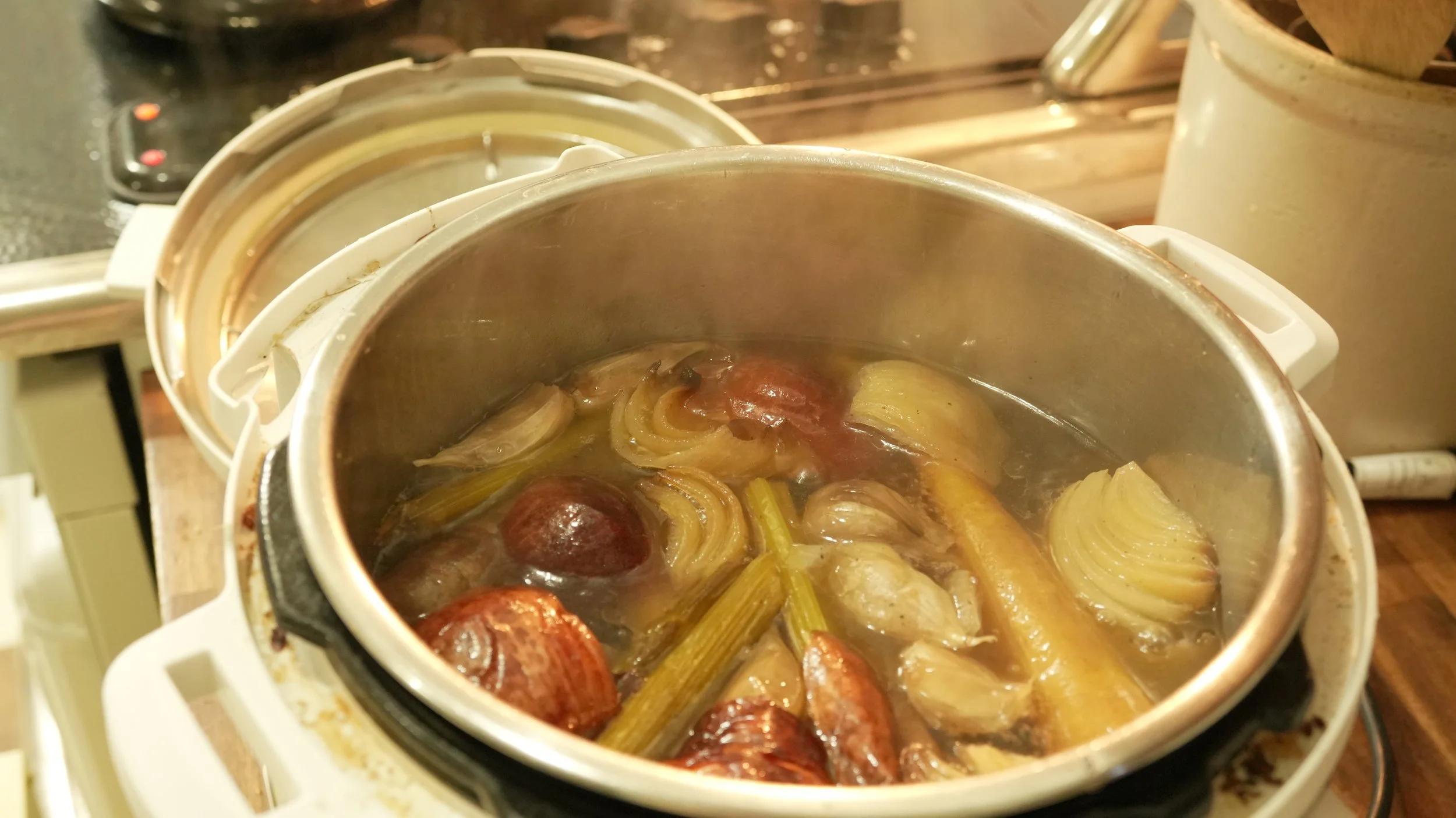
Once roasted, everything goes straight into the Instant Pot.
I use a 6-quart Instant Pot, adding the roasted bones and vegetables first, then filling with water up to the soup max fill line.
Set the Instant Pot to:
High Pressure
60 minutes
When the cooking time is finished, allow for a natural pressure release if possible. The broth will be deep brown, glossy, and incredibly aromatic.
If you prefer an even richer broth, you can pressure cook longer — up to 2 hours — to extract every bit of marrow and mineral from the bones.
Before discarding the bones, I often scoop out any remaining marrow and add it directly to soups for extra nourishment.
Storing Your Beef Bone Broth
I use what I need right away and freeze the rest.
My preferred method is pouring cooled broth into gallon freezer-safe zip bags, laying them flat to freeze. When it’s time to cook, I take the frozen broth straight from the freezer and drop it directly into whatever soup I’m making — no thawing needed.
You can pressure-can beef broth for shelf storage following proper canning guidelines, but freezing works beautifully and keeps things simple.
A Quiet Kind of Nourishment
Beef bone broth is slow food in the truest sense. It asks for patience, intention, and care — and it gives back generously.
This is the kind of food that sustained families through hard seasons, long winters, and busy days. It reminds us that nourishment doesn’t need to be complicated to be profound.
A pot of broth on the stove has a way of making a house feel like home.

Beef Bone Broth
Beef bone broth is hearty and mineral-rich, full of protein, collagen, electrolytes, and slow-released nutrients that truly fill your belly — but also your soul. It’s the kind of nourishment that makes you feel cared for.
Ingredients
Instructions
Notes
- Look for marrow-rich, grass-fed beef bones for the most nutrient-dense broth.
- Onion skins add beautiful color and depth — no need to fully peel.
- Roasting at 350°F creates a gentler flavor; 400°F gives deeper browning faster.
- If fat begins to smoke while roasting, lower the oven temperature.
- Pressure cooking longer than 1 hour creates a richer, more gelatinous broth.
- Scoop remaining marrow from bones and add directly to soups for extra nutrition.
- Broth can be frozen flat in gallon freezer bags and used straight from frozen.
Yield:
- Approximately 4 quarts (16 cups)
- About 8 servings

Nutrition Facts
Calories
212Fat
21 gSat. Fat
1 gCarbs
5 gFiber
1 gNet carbs
4 gSugar
2 gProtein
2 gSodium
27 mgCholesterol
0 mg